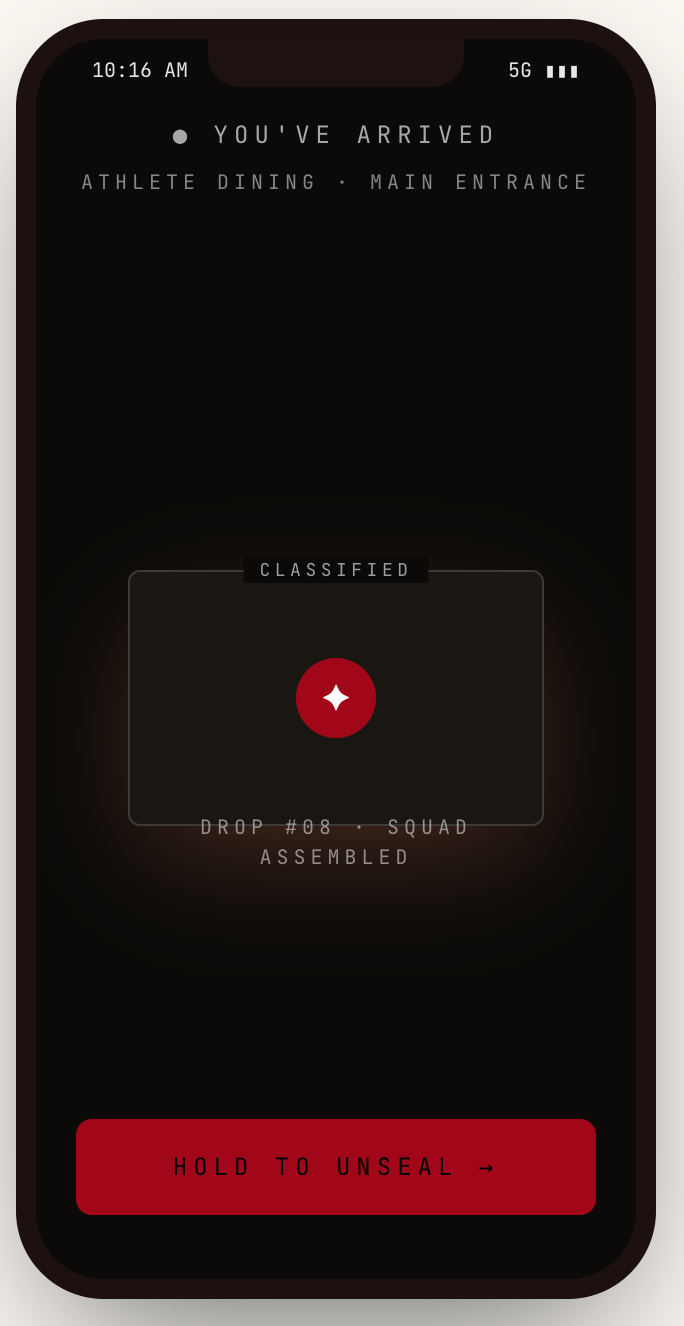
Stanford DAWT — “Does anyone want to?”
Spontaneous missions for the curious campus. DAWT is an activity-drop concept that gives Stanford students a low-pressure way to break out of their routines, meet new people, and bring the spontaneity of study abroad back to campus.
- Timeline
- Spring 2026
- Team
- Individual project
- Role
- Student in Stanford Design 1 Course.
- Skills
- Needfinding interviewssynthesis & ideationrapid prototypinguser testingsurvey feedback
01 — Problem
The problem
Social connection and interaction is decreasing throughout the world. In conversations with Stanford students who had studied abroad, a pattern emerged: they felt less socially connected on Stanford’s campus than they were abroad.
Students are hesitant to create new friendships after forming their social networks freshman year, feel constrained by Stanford’s demanding academic schedule, and feel that social experiences on campus lack spontaneity and adventure. Abroad, they felt more freedom and willingness to engage with new people.
02 — Research
Research & needfinding
I reached out to peers to find students who had studied abroad, then conducted interviews over the phone. Going in, I hoped to learn about the social experiences they had abroad and how they compared to their time on Stanford’s campus — what social activities happened abroad, and what Stanford students are missing when it comes to community and connection.
01
Alex
A junior who studied abroad in Florence for 11 weeks in Fall 2025. Values authentic, meaningful connections and needs an environment where socializing comes naturally — not forced or transactional.
02
Katie
A sophomore who studied abroad in Cape Town, South Africa in Summer 2025. Values making connections outside of her everyday social circle and unstructured time with peers.
03
Maya
A senior who studied abroad in Madrid in autumn of her junior year. Values activities that encourage vulnerability and exploration, and wishes campus had more of them.
“After freshman fall people seem less interested in meeting each other and they’re more focused on work.”
“It’s important to find people who have similar values and make similar choices as you.”
03 — Findings
What the interviews revealed
- Students who've been abroad agree they were more socially connected abroad than at Stanford — in part due to the demanding academic schedule, and because people are less willing to reach out to new people after frosh fall.
- New friendships abroad were built through spontaneous, adventurous activities — bonding over the memorableness of what they were doing and the choice to do something spontaneous together.
- Students need a choice of opportunities to engage in spontaneous and adventurous social experiences at Stanford, so they can connect with a diverse group of peers like they did abroad.
04 — Ideation
Synthesis & ideation
Ideas were plotted on two prioritization grids — cost versus impact, and ease of implementation versus potential for impact — to narrow the field. Three concepts rose to the top:
- DAWT: A Friend Hotline
- A university hotline where students can reach out to others online to see if they want to hang out — open 24/7.
- Passport Stanford
- A physical (or digital) passport where students receive a stamp for attending a social experience on campus — most stamps earns a prize.
- Adventure Drops — later renamed DAWT
- Students sign up solo or with friends to receive a spontaneous activity drop. They only know the meeting location — activity details are revealed on arrival.
The selected idea — Adventure Drops — lets students state their activity and social preferences through a sign-up form. To mitigate unintended consequences around safety, students can sign up as a private group, student ID numbers are required at sign-up, and conversation prompts are included during activities so participants don’t only talk to people they already know.
05 — Prototype
Prototyping the experience
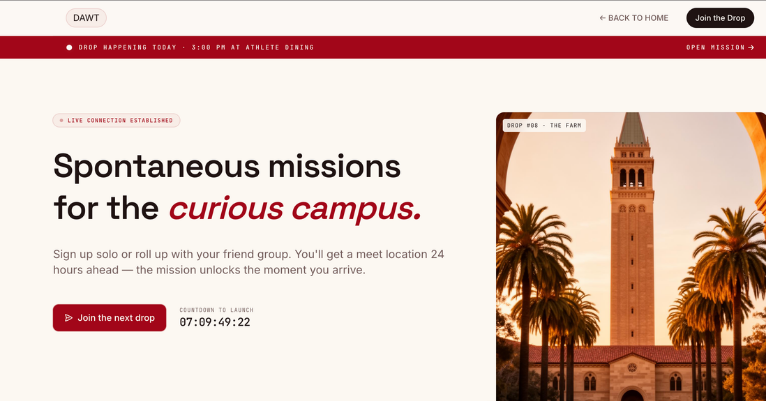
The flow of the idea: users sign up on the app, the mission becomes available 24 hours prior, they arrive and follow prompts, and the mission is complete.
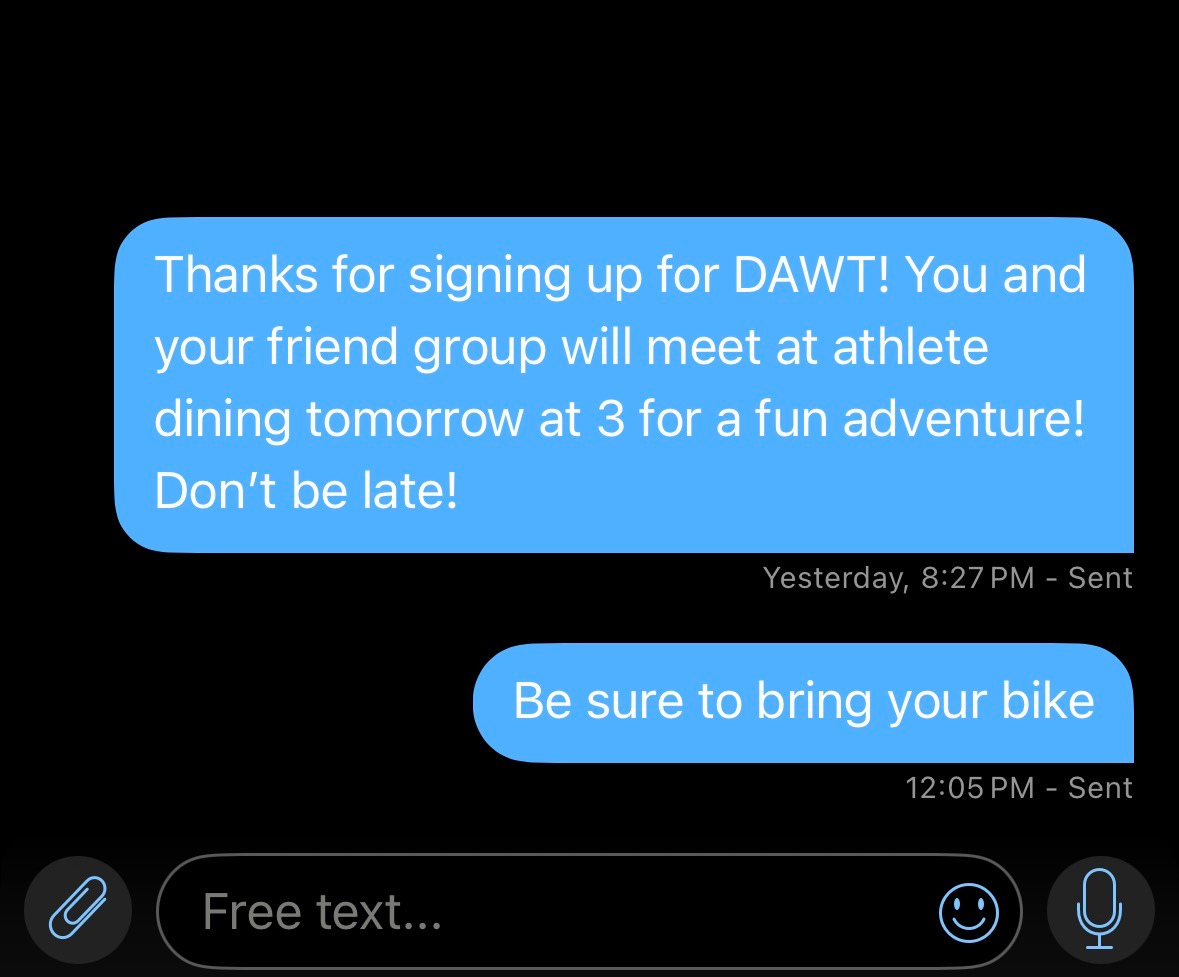
To test it, I built a working prototype: a Google Form served as the sign-up flow, a text blast sent 24 hours before mimicked the app notification, and printed notification prompts were handed to participants during testing. The app screens were designed and built with Lovable, accessible through a QR code.
06 — Iteration
Iteration
Initially, my idea was that people would only sign up solo and get paired with strangers to make new friends — under the name “Adventure Drops.” After critique in class, I received valuable feedback that caused me to make changes.
I added the feature of signing up as a group of friends to reduce anxiety and potential safety hazards. I was also advised to change the name, with Stanford already having many platforms named “____ drop.” My peers really liked “DAWT: does anyone want to” from my other idea of a friend hotline, and suggested I use it for the activity drops concept instead — which I did.
After testing the prototype, I realized people may have a difficult time carrying a conversation for the entire length of the activity, which is why conversation prompts were added. I also added safety check-ins throughout the activity, so students have the option to leave if they feel uncomfortable or unsafe.
07 — Testing
Testing
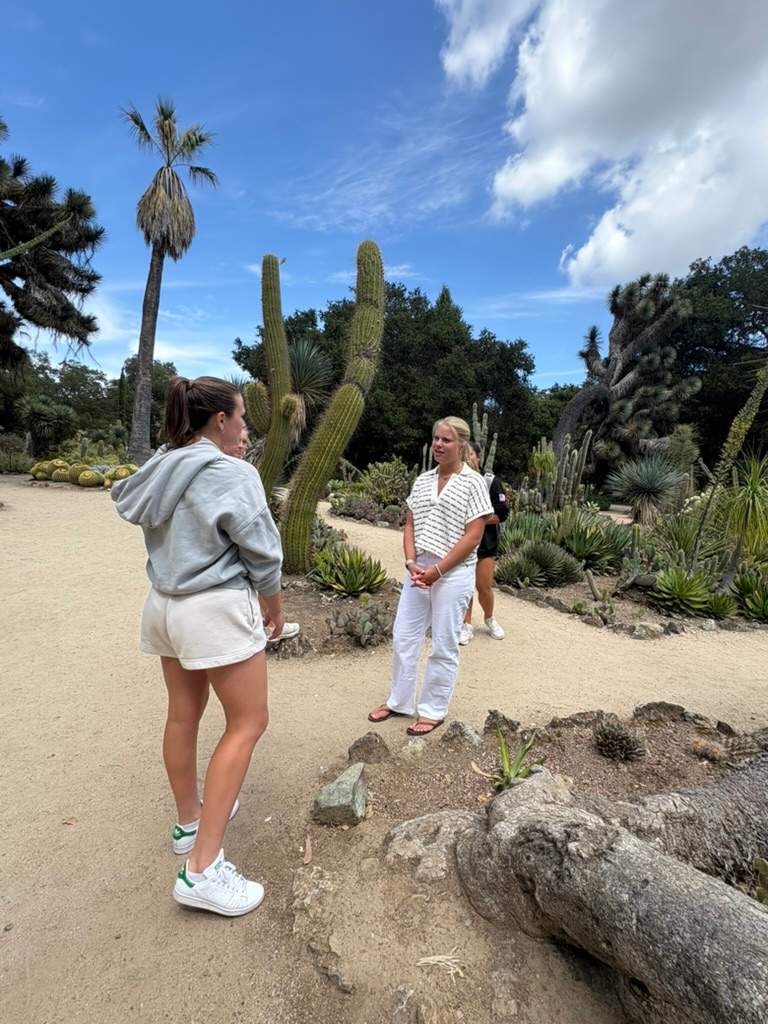
24 hours before testing, I texted participants details of where and when to meet and what to bring. The next day, they met at the meeting point and were prompted by paper instructions to bike to the campus Arizona Cactus Garden, where they walked and explored for 20 minutes. The activity continued with a prompt to go to Tressider for a snack and hang out — after that, participants were free to leave whenever they desired.
Throughout testing I observed how users reacted to the activity. This group was eager to engage and connect with the other participants, and expressed excitement and curiosity towards the spontaneity and adventure of the activity.
DEBREIF QUESTION
“In what ways did your socialization here feel different from your typical social interactions on campus?”
DEBREIF QUESTION
“Did the spontaneity make social interaction easier or harder?”
DEBREIF QUESTION
“List a few emotions you felt throughout the experience and elaborate.”
“This was honestly more fun (than day to day interaction) because it was bringing people together that were ready to be spontaneous in the moment, usually people are not down for things like this.”
08 — Reflection
Findings & reflection
I enjoyed this experience because I got to explore the process of needfinding into making and testing a prototype. The initial insight was that Stanford is lacking social experiences that are spontaneous and adventurous, and it is difficult to engage in these activities due to demanding school schedules.
Through my testing, I believe the prototype accomplished the goal of creating a spontaneous and adventurous activity. However, I do not think it successfully navigated around the issue of the demanding academic schedule at Stanford — it was difficult to get participants who were willing to sign up, likely due to demanding schedules. I am also curious how the activity would have run if I was not there: throughout the activity, participants defaulted to me to lead them through it, rather than the prompts I had given them.
09 — Next steps
Where it goes next
01
More testing
More tests with people of many different backgrounds are necessary to ensure the experience continues to run successfully, and provide more user feedback to apply.
02
Development of the app
The app will need to continue to be developed and tested to ensure there are no glitches or bugs — continuing with Lovable or working with someone with ample coding experience.
03
Publicity and advertising
Continue to advertise the app to gain participants, looking into what causes people to sign up for activities like this and download an app, to appeal to Stanford students and maximize users.